The Word Everyone Uses Wrong
It is poor conflict skills. It is an ego nobody ever challenged, or a person who never learned to sit still inside being wrong. None of that is pleasant to live with, but none of it is a personality disorder either, and collapsing the two categories does a disservice to both.
Real narcissistic personality disorder is rarer, and stranger, than the internet caricature of the loud man in the mirror. It does not look like confidence turned up too high. It looks like a structure built almost entirely from the reactions of other people, with very little holding it up from the inside.
This confusion is not entirely the fault of the people making it. Pop psychology has spent years flattening a clinical term into a personality flaw, because a flaw is easier to gossip about than a disorder. The word travels well precisely because it sounds authoritative while requiring no evidence, no history, and no training to use.
Somewhere along the way, calling someone a narcissist stopped being a claim you had to support and became a feeling you were allowed to express instead.
The Culture Is Making Narcissism Harder to Spot
Social media did not invent narcissism. But it built the first economy that pays for it, in likes and follows and the small chemical hit of being seen.
Every platform rewards behavior that can overlap with narcissistic tendencies: performance over substance, image over interior life, and admiration collected like currency.
The culture around us has quietly raised the reward for narcissistic behavior while lowering its cost. It has done this to almost everyone at once, not just the people we suspect.
Curated selves are the default now, not the exception. Everyone is a little more performative than they were twenty years ago, whether they notice it or not. That shift makes the real disorder harder to spot, not easier, because the surrounding behavior looks almost identical from the outside.
When self-promotion is the water everyone swims in, the person whose entire identity depends on the audience blends in rather than standing out. The line between adapting to a status game and being consumed by one has gotten thinner. Most of us are closer to that line than we would like to admit.
Comparison used to require effort. You had to know your neighbors, notice their car, hear about their promotion secondhand over a fence. Now comparison arrives automatically, sorted by an algorithm that has learned exactly which images make you feel smallest, and it does this to narcissists and non-narcissists alike, just with different consequences for each.
For someone with the actual disorder, this environment is closer to oxygen than to temptation. It offers an endless, low-cost supply of the exact validation their psychology depends on, delivered on demand and refreshed the moment it fades. For everyone else, it simply raises the noise, making it harder to tell who’s unwell and who’s just fluent in the same performance.
What the Diagnosis Actually Requires
Clinically, narcissistic personality disorder asks for more than vanity. It requires a pattern of grandiosity, a persistent need for admiration, and a genuine deficit in empathy. That pattern has to show up across years and across relationships, not just during one bad breakup or one difficult quarter at work.
Crucially, it also requires fragility underneath the confidence, not instead of it. That last part is the piece most casual diagnoses miss entirely. The grandiosity is not solid ground; it is scaffolding built over a self-worth that collapses the moment it isn’t reflected back.
That is why criticism so often produces rage or withdrawal, rather than reflection. The person is not secretly fine underneath the display. There is no underneath, only more scaffolding, all the way down.
This is why the disorder is so exhausting to live alongside. A disagreement, a compromise, an honest complaint — ordinary friction — can register as an existential threat. What looks like arrogance from a distance is closer to a person defending the only structure they have, in the only way they know how.
Understanding this does not make the behavior forgivable. It does make it legible, which is a different and more useful thing. There is also a quieter presentation that rarely makes it into online discussion, sometimes described as vulnerable narcissism.
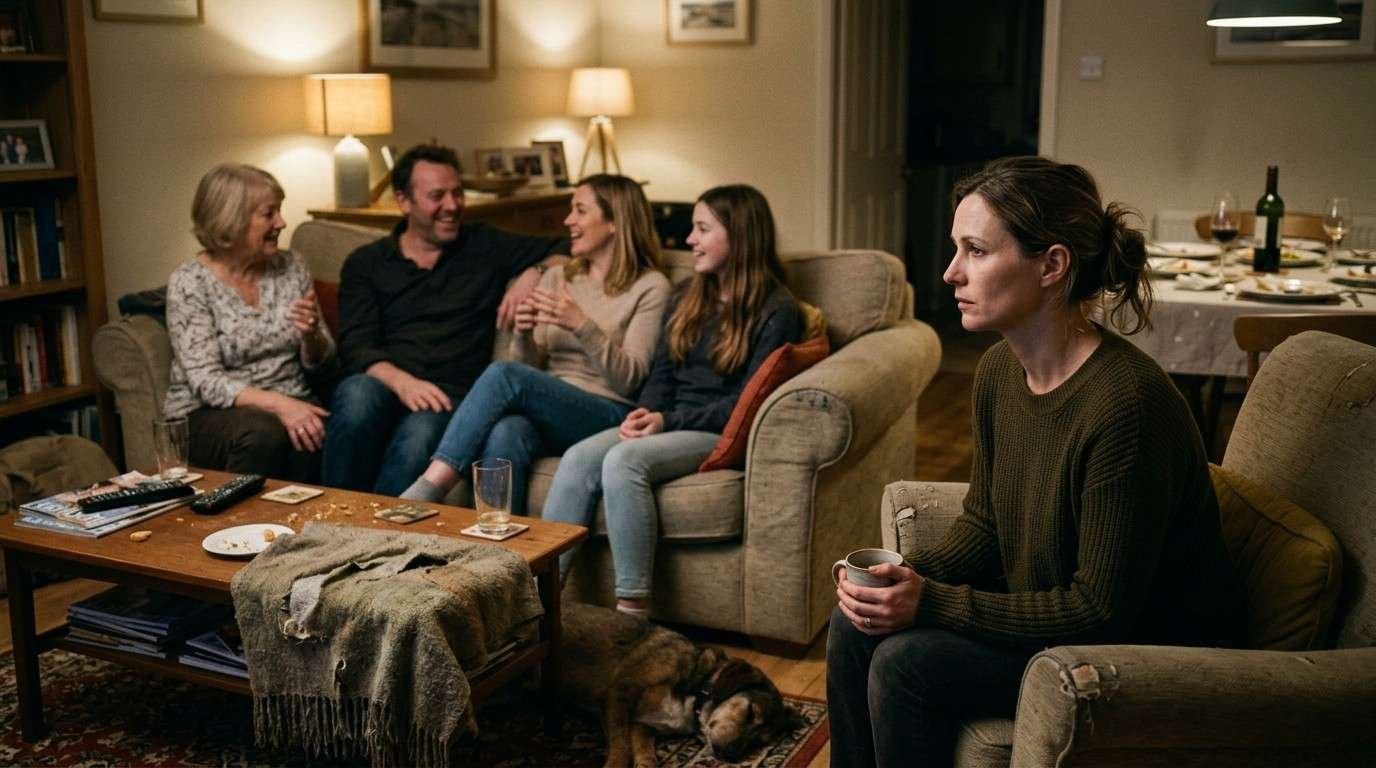
It can look less like obvious grandiosity and more like a persistent sense of being underappreciated, with admiration-seeking disguised as chronic hurt. It’s harder to spot because it looks like sensitivity rather than ego, and it can sit in a family for a generation unnamed.
She Thought Her Father Just Had a Big Personality
I worked with a client once, whose details I’ve changed here with her permission, who spent almost a decade believing her father simply “had a big personality.” She came to hypnotherapy for something unrelated: a fear of public speaking that would not resolve no matter what she tried on her own. It took several sessions before the real pattern surfaced underneath it.
Her fear was not about audiences. It was about a specific look her father gave her whenever she outshone him, a look she had spent her whole life learning to avoid provoking. She had never called him a narcissist, because she assumed narcissists were loud, and her father was quiet in a way that felt noble.
What changed for her was not a diagnosis. She still doesn’t know, and doesn’t especially want to know, whether he would meet the full clinical criteria for the disorder. It was permission to notice that his quiet had a function, that it was doing work in the room rather than simply existing in it.
Once she saw the pattern instead of the personality, the fear of speaking up loosened on its own. It had never really been about rooms full of strangers. It had only ever been about one room, and one face in it.
That is often how these patterns get found: sideways, through a symptom that seems unrelated until it isn’t. Nobody walks into hypnotherapy asking to understand their father’s ego. They walk in exhausted by something specific, and the ego turns out to be what was underneath it the whole time.
She didn’t need a diagnosis to fix the pattern that mattered to her. She needed the shape of it, clear enough to stop mistaking it for something in herself.
What Staying Costs
People close to someone with narcissistic personality disorder tend to describe the same experience in different words: a slow erosion of their own certainty. Reality gets renegotiated constantly. Small moments get rewritten after the fact, until the other person stops trusting their own memory of what happened, even when they were clearly right.
This is not the same as being in a relationship with someone who is simply selfish. Selfishness has edges. You can point to it, name it, sometimes negotiate around it, because a selfish person usually knows they took more than their share.
Narcissistic dynamics are harder to point to, because the person on the receiving end is often made to feel responsible for noticing the pattern in the first place. Naming it starts to feel like the actual offense.
What gets lost is rarely dramatic. It is the smaller sense of being a reliable narrator of your own life, worn down conversation by conversation, apology by apology. Stability itself starts to feel like something you have to earn rather than something you’re owed.
People in these relationships often describe feeling tired in a way that has no obvious cause. The cause was never one event; it was thousands of small ones.
The children of parents with the disorder carry a particular version of this. They grow into adults who read rooms well but trust their own reactions poorly, a trade that served them at eight and quietly costs them at thirty-eight.
Friends and partners often notice the exhaustion before they can name its source. They describe a specific fatigue that follows even good interactions with the person, a low hum of having performed rather than simply spoken.
That hum is worth listening to, because it is frequently more honest than anything said out loud in the room.
You Already Know More Than the Label
The label matters less than most people think it does. Whether a difficult person meets the full clinical bar for narcissistic personality disorder changes very little about the practical question in front of you. That question is simply whether the relationship leaves you steadier or smaller over time, and it does not require a diagnosis to answer honestly.
Diagnosis-hunting online often functions as a delay. It feels like understanding, but it mostly postpones the harder work: deciding what you will and will not accept. Clarity about the pattern is more useful than certainty about the label.
That clarity is available to you right now, without a referral. Notice the pattern. Name what it costs you, in plain terms, the way you would describe a debt.
Most people already know the answer before they go looking for the label. They just don’t trust themselves enough to act on it without a clinical stamp. The stamp was never going to arrive in time to help, and it isn’t the thing that was missing.
Then let the clinical question become someone else’s job to answer, if it needs answering at all. Your job was only ever to trust what you were seeing.
None of this requires you to stop caring about the person, or to rewrite the relationship overnight. It only asks you to stop outsourcing your own judgment to a word you found online at midnight.
The pattern was always visible before it had a name. It will still be visible after you decide, calmly, what to do about it.