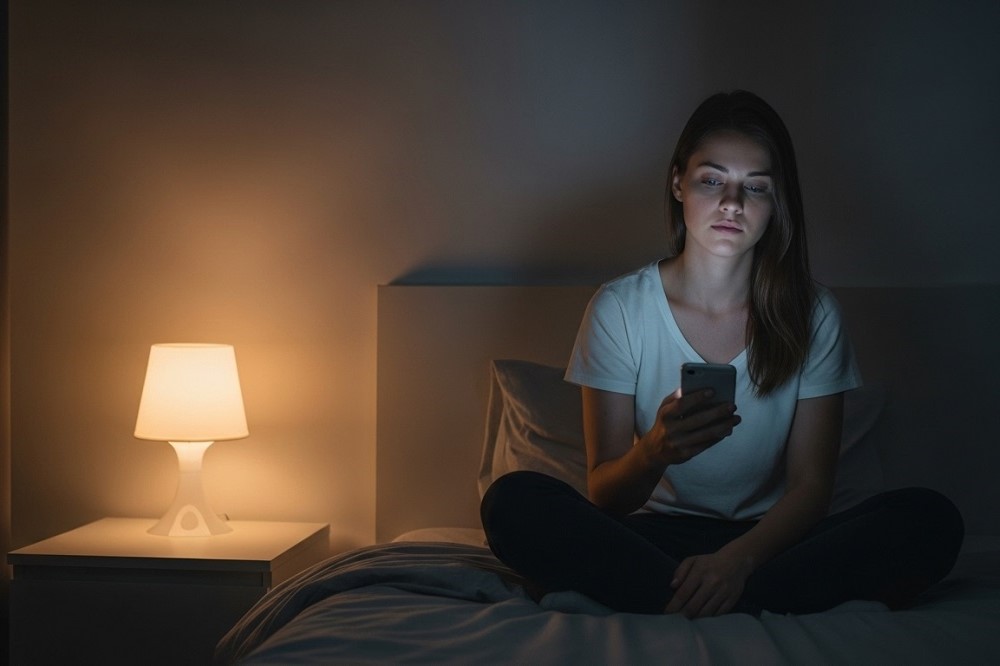
Which raises the question the entire online dating industry would rather you didn’t ask: if the filter can’t measure what actually matters, what is it measuring?
And whatever it’s measuring—is it helping you, or is it training you to want the wrong things?
The Promise and the Sleight of Hand
Online dating’s core proposition is seductive precisely because it sounds rational.

Here are millions of potential partners. Here is a system for sorting them by your stated preferences. Here is an optimized shortlist of people you already have things in common with. Compared to meeting someone at a bar at 11pm through a combination of proximity and desperation, this sounds like obvious progress.
And in some narrow ways, it is. Online dating has genuinely expanded the pool—particularly for people in smaller communities, for LGBTQ+ individuals, and for anyone whose social circle doesn’t naturally overlap with potential partners. That’s real and worth acknowledging.
But the proposition contains a sleight of hand. A significant one.
The filter presents itself as a tool for finding compatibility. What it’s actually doing is selecting for legibility—for the qualities about a person that can be represented in a profile. Attractiveness in photographs. Wit in a bio. Demographic data. Stated interests that may or may not reflect actual personality.
These things are not nothing. But they are a very thin slice of what makes two people actually work together.
The rest — how someone responds when plans fall apart, whether their presence makes a room feel warmer, how they treat the waiter, the specific texture of their sense of humor in real time — none of that fits in a profile. And because it doesn’t fit in a profile, the filter has quietly decided it doesn’t exist.
What Your Nervous System Already Knows
Here’s where online dating runs into a problem it can’t engineer its way out of.
Humans did not evolve to assess romantic compatibility through photographs and text. We evolved to assess it through presence—through thousands of micro-signals transmitted in the first few minutes of meeting someone in person. Vocal tone. Physical ease. Eye contact. The almost subconscious read on whether someone is genuinely interested in you or performing interest.
Research on speed dating — where participants meet potential partners for three to eight minutes each — consistently finds something that should make every app developer uncomfortable. People’s stated preferences, what they say they want in a partner when asked beforehand, correlate very poorly with whom they actually show romantic interest in when they meet face-to-face.
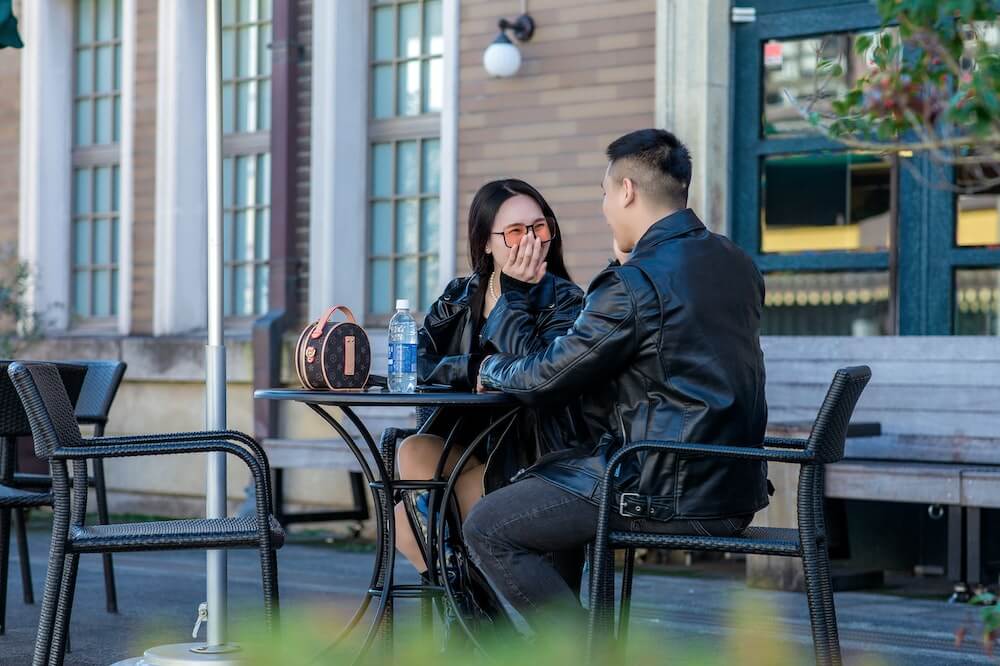
In other words, you think you have a type. Your nervous system disagrees. And your nervous system has been doing this a lot longer than you have.
A dating profile is essentially a request for your conscious mind to make a decision that your nervous system would handle better. You’re reading a résumé for a job that has never once been filled by a résumé.
Blind dates—awkward, unoptimized, with no pre-screening beyond “I think you two might get along”—force the actual evaluation to happen. You meet the whole person at once, in real time, with no preview and no script. It’s uncomfortable. It’s also the closest thing to how human attraction actually works.
The irony is that online dating, in trying to make the process more efficient, has removed most of the information that makes the process work.
Too Many Options, Too Little Commitment
In 2000, psychologists Sheena Iyengar and Mark Lepper ran what became one of the most replicated studies in consumer psychology. They set up a tasting table of jams—sometimes six options and sometimes twenty-four. More people stopped at the larger display. But people who chose from the smaller selection were ten times more likely to actually buy something.
More options produced less commitment. And significantly more regret.
Barry Schwartz formalized this as the Paradox of Choice: beyond a certain threshold, additional options don’t improve decisions. They paralyze them. They also introduce a persistent background question — but what about the others? — that undermines satisfaction with whatever you did choose.
Online dating has industrialized this problem to a scale Schwartz could not have imagined.
There are not six potential partners to evaluate. There are thousands, theoretically, within a five-mile radius, available at any hour, requiring nothing more than a thumb movement to access. The next option is always one swipe away. Which means that every person you meet carries, invisible but present, the weight of everyone you haven’t met yet.
This is not a personal failing. It’s a structural feature of the medium.
The result is what researchers now call the “shopping mentality”—evaluating potential partners the way you’d evaluate a product, looking for reasons to disqualify rather than reasons to invest. A slightly awkward first message. A photo that doesn’t quite land. An interest that seems a bit niche. In a world of theoretically unlimited options, the threshold for rejection drops to almost nothing.
After all, why settle for this particular option when the algorithm is presumably about to show you a better one?
It never does. But the belief that it might is enough to keep you swiping.
You’re Already Talking About Love Like a Shopper
Pay attention to how people talk about online dating. The vocabulary is borrowed wholesale from economics and product markets.
I’m back on the market. There are plenty of fish. I’m keeping my options open. I’m not ready to settle. I’ve been ghosted — discarded without explanation, like a product returned to a warehouse.
This language isn’t accidental. It reflects a genuine psychological shift that happens when mate selection is structured as a marketplace.
When you frame romantic partners as options in a market, you start evaluating them the way markets evaluate options — comparatively, competitively, and with an eye toward whether something better might become available. You stop asking, “Can I grow with this person?” and start asking, “Is this person the best currently available deal?”
Those are very different questions. And the second one is actively bad at selecting for what makes relationships last.
Relationships require the willingness to invest in an imperfect person. Markets are designed to help you avoid imperfect products. The mental model and the task are working against each other. And online dating, by presenting the whole enterprise in market terms, installs the mental model before you’ve met a single person.
You show up to a first date already thinking like a consumer. Which is, to put it gently, not the energy that builds lasting relationships.

The Filter Is Rewiring How You See People
Here’s the thing about filters: they don’t just select. They train.
Use any filter long enough and you start to see the world through it. You start to evaluate options according to their criteria not because those criteria are right, but because they’ve become habitual. The filter shapes the taste.
Online dating, used consistently over months or years, trains you to make rapid judgments from thin visual and textual information. It trains you to treat attraction as binary—swipe left, swipe right—when in reality attraction is far more complex, contextual, and often delayed. It trains you to overweight initial presentation and underweight the qualities that take time to surface.
Research published in Psychological Science found that couples who met online reported lower marital satisfaction and higher rates of separation than those who met through mutual connections or chance encounters.
Eli Finkel’s research at Northwestern University found that browsing profiles activates a “commodity mindset” — the brain gets trained to keep scanning for a better option rather than investing in the person already in front of you.
The filter was working perfectly. It just wasn’t filtering for the right thing.
The Only Question Worth Bringing to a First Date
None of this means online dating is worthless. It means the useful question has been misidentified.
The question most people bring to online dating is, “Does this person meet my criteria?” The question that would actually serve them better is, “Am I curious about this person?”
Curiosity is the precondition for genuine connection. It requires not knowing everything upfront. It requires some uncertainty—the particular pleasure of discovering someone through conversation, through shared experience, through the slow accumulation of small moments that don’t fit any profile.
Online dating, structurally, works against curiosity. It front-loads information. It answers questions before they’ve been asked. It removes the discovery from what is supposed to be a process of discovery.
The most useful thing a dating app could do — and none of them will do it, because it would reduce engagement — is show you less. Give them the barest information necessary to meet someone and then get out of the way.
Because what you’re actually looking for cannot be delivered by an algorithm.
It can only be found in a room, with another person, in real time, with all the awkwardness and uncertainty that entails.
That’s not a bug in the process. It’s the process.
Say ‘Yes’ to the Blind Date. Here’s Why.
Online dating is a filter. It is genuinely filtering something.
What it’s filtering for is a version of a person that looks compelling before you’ve met them—which is a very different thing from a person who is compelling to be with.
The gap between those two things is where a lot of romantic disappointment lives.
This doesn’t mean deleting the apps tonight. It means holding the whole enterprise a little more lightly. Treating a match as the beginning of information-gathering, not the end of it. Being willing to meet people who don’t quite scan on a profile, because the profile is always a poor instrument.
And maybe—occasionally—saying ‘yes’ to the blind date.
Not because blind dates are comfortable. They’re not. They’re a mild social ordeal during which at least one person will say something awkward and both people will briefly regret agreeing to this.
But they put you in the same room as an unoptimized, unfiltered, fully real human being.
Which is, it turns out, the only place where any of this actually happens.