
That’s not a niche behavior anymore. Something that widespread isn’t a fringe TikTok joke. It’s a coping mechanism an entire generation quietly adopted at the same time.
What makes it interesting isn’t that people are spending more time in bed. It’s how the behavior gets framed. Instead of laziness or burnout, it’s presented as legitimate self-care, aesthetic and all — matching loungewear, curated blankets, a ring light nearby.
The message underneath: after years of being productive, doing nothing might be an act of rebellion. Maybe it is. But a harder question waits under the duvet: when does rest stop being rest, and start becoming avoidance?
Why Stillness Became So Appealing
To understand why bed rotting caught on, look at what it’s pushing against. It didn’t appear from nowhere. It grew inside a culture that turned productivity into a measure of worth.
Gen Z came of age surrounded by messages urging them to improve every part of their lives—from their productivity and careers to their appearance, fitness, mental health, and personal brand.
Hustle culture insisted a normal job wasn’t enough. Academic pressure made time off feel like falling behind. Social media turned spare hours into an opportunity to build a brand, learn a skill, or become more impressive before breakfast. Even relaxation picked up performance criteria.
Then came the pandemic, a brutal job market, climate anxiety, and a news cycle allergic to good news. For an already stretched generation, the pressure to keep performing didn’t ease. It got harder to escape, since work, entertainment, and comparison all live in the same rectangle in your hand.
Under those conditions, bed rotting offers something simple: permission to stop. No application. No expensive retreat. No twelve-step morning routine. You get into bed and withdraw from the world’s demands.
That can be genuinely powerful, especially for people taught their whole adolescence that rest has to be earned. Bed rotting isn’t really about wanting to stay in bed. It’s a rejection of the idea that every waking hour must be justified.
The trouble starts when permission quietly turns into pattern.
When Rest Starts Looking Like Avoidance
Bed rotting isn’t inherently harmful. Sometimes doing very little is exactly what a person needs. After a rough week or real exhaustion, withdrawing for an afternoon can genuinely restore you.
Your nervous system isn’t built to run at full speed forever. Recovery requires periods where demands drop. What matters is what fills that downtime.
Scrolling for hours while horizontal can feel restful, since your body isn’t moving. But your brain is still absorbing stimulation and comparison. Physically you’re still. Psychologically, you might still be fully “on.”
That doesn’t make scrolling automatically bad. Sometimes mindless entertainment is exactly what you want. The real question is whether it leaves you feeling restored.
This is where bed rotting can slide into avoidance. The behavior itself won’t tell you which side you’re on — your relationship with it will.
Notice what happens once you finally get up. Calmer and steadier means the pause did its job. Foggier, more anxious, and less willing to face your life means the bed gave you something other than rest.
This isn’t just self-help talk, either.
Rest and stimulation aren’t quite the same thing. Lying still for six hours while feeding your brain a constant stream of videos, messages and other people’s lives may leave your body stationary without giving your mind much of a break.
Avoidance is deceptive because it starts with relief. The hard conversation waits. The overdue decision waits too. For a while, nothing is required of you — and that relief can feel a lot like recovery, until it isn’t.
The Bed Isn’t Always The Problem
Avoidance rarely announces itself. Nobody lies down thinking, I’m going to spend six hours avoiding what scares me.
The internal story sounds more reasonable: I’ll just rest for a while. Then you check your phone. One video leads to another. Three hours vanish, the original problem hasn’t moved, and you now hold a working theory on a stranger’s divorce, based entirely on their vacation photos.
This matters because of how avoidance works psychologically. Escaping discomfort brings immediate relief, and your brain learns from that relief. It reinforces the urge to escape again next time.
Over time, the pattern gets efficient: something feels hard, you withdraw, you feel better briefly, the hard thing stays exactly where it was.
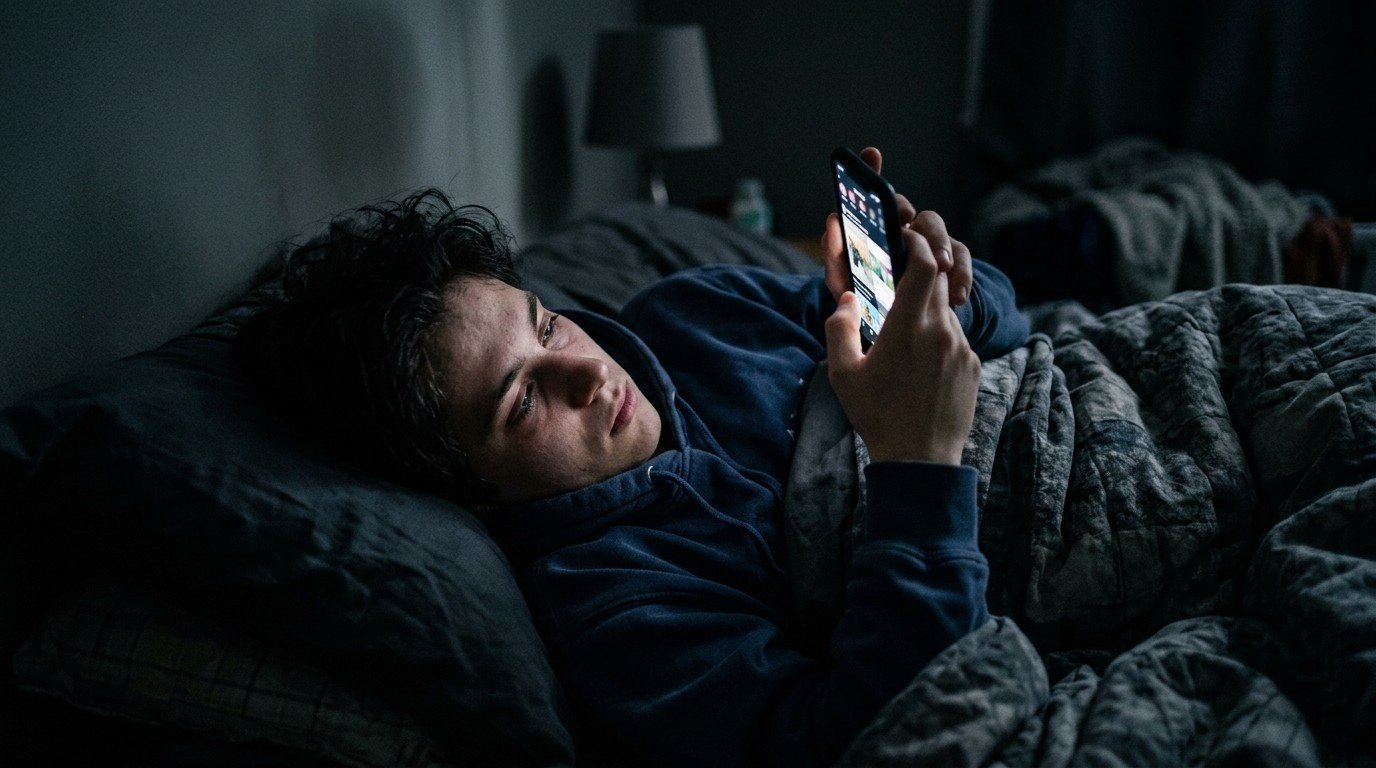
Bed rotting can become part of that loop without starting it. Picture the unread email sitting in your inbox all afternoon, untouched, while three hours of videos play instead. The overdue email is still there.
So is the difficult relationship, or the question of what you actually want from your life. None of it gets smaller because you spent the afternoon under a blanket.
That doesn’t mean force yourself up every time you’re uncomfortable. Sometimes you’re genuinely depleted and need real recovery. The useful question is whether the pause helps you re-enter your life, or makes re-entry feel harder.
What Bed Rotting Reveals About Us
Step back and bed rotting looks less like a quirky trend, and more like a response to normalized exhaustion.
An entire generation has been told to work harder, build skills, and stay employable. They’re also expected to nurture relationships, exercise, eat well, save money, and somehow enjoy their twenties. That’s an ambitious list for people who are already tired.
Bed rotting offers an exit that requires no negotiation with anyone. You don’t have to ask an employer for flexibility, or explain your struggle to friends. You just close the door and disappear for a while.
There’s real appeal in that kind of withdrawal when the world feels relentless. None of this is really about beds. It’s about a generation that learned needing something from other people can look like weakness.
Retreating alone feels safer than asking for help, even when asking would actually work better.
It also explains why calling it “self-care” feels liberating. For people who equate stillness with laziness, the label grants permission — it says doing nothing has value. And it can.
The problem starts when the label replaces honest self-assessment. We rename avoidance because the original word is uncomfortable. “Self-care” sounds nicer than “I don’t know how to handle my life right now.”
That doesn’t make anyone weak. It makes them human. But naming the behavior accurately is what actually lets you change it.
When Doing Nothing Helps You Recover
None of this means feeling guilty next time you cancel plans and vanish under a duvet. Rest doesn’t need a permission slip, and it definitely doesn’t need to be productive.
Sometimes you’re simply exhausted, and doing less is exactly right. The better test is what happens afterward.
If your bed rotting session leaves you calmer and more like yourself, there’s little reason to turn it into a crisis. Your system likely benefited. That’s not a small thing — a genuinely calmer nervous system is worth protecting, even if it doesn’t look productive from the outside.
But if you keep retreating because everything outside feels too hard, then scroll until you feel worse, the pattern deserves a closer look. Not because you failed at self-care — because rest might be solving the wrong problem.
There’s a difference between I need a break and I need to avoid this a little longer. The first has an ending; you rest, recover, and get moving again. The second keeps renegotiating — ten more minutes becomes another episode, another afternoon, until the thing you avoided grows heavier under a layer of guilt.
The Fear Behind Doing Nothing
Something deeper may sit underneath our discomfort with stillness. Most people aren’t afraid of doing nothing. They’re afraid of what they’ll notice once they stop.
Constant activity keeps difficult thoughts at a comfortable distance. So does scrolling, streaming, working, and every other way we fill empty hours. When the stimulation disappears, there’s suddenly room for your own thoughts.
That’s uncomfortable to sit with. It’s far easier to keep the noise running than to ask what the silence is trying to tell you.
Stopping can make certain things harder to ignore. Maybe you’re exhausted by your job. Maybe the relationship isn’t working. Perhaps the goal you’ve spent years chasing has quietly stopped mattering to you.
Productivity protects us from those discoveries. So does distraction — including a phone held six inches from your face while you’re technically “resting.”
This is what makes bed rotting culturally interesting. The bed offers physical comfort and psychological distance at once, and sometimes that distance is exactly what you need. The problem starts when the distance becomes the destination.
If you keep choosing bed because life outside feels unmanageable, the real question isn’t how to rest better. It’s what you’re avoiding facing.
You Don’t Need To Abandon The Duvet
The answer isn’t more discipline, and it isn’t shame either. If you’re already exhausted, guilt won’t restore your nervous system.
Instead, get curious about your own pattern. Next time you’re bed rotting, notice how you got there. Did you choose the afternoon off deliberately, or crawl into bed because something felt too hard to face?
Then notice what happens afterward. Restored enough to return to your life, or more anxious and stuck? Neither answer makes you a bad person — it just tells you what the behavior is doing.
If you’ve been hiding rather than resting, you don’t need a heroic comeback. Open the curtains. Take a shower. Step outside for ten minutes. Answer one message. Do one small thing that reconnects you to the world.
The goal isn’t becoming someone who never retreats — that’s not resilience, that’s denial. Healthy rest gives you somewhere to return from. Progress here doesn’t have to be dramatic. It just has to be real.
So keep the duvet, and keep the lazy Saturday. It’s cheaper than a wellness retreat, and the snacks are better. Just make sure the bed is a place to recover, not a place to disappear.
Because there’s nothing wrong with doing nothing. The real question is whether, when you finally get up, you’re returning to your life — or still avoiding it.