The problem is not effort. The problem is method.
The brain has very specific preferences about how it stores information. Unfortunately, many of the techniques that feel most like learning are the exact techniques the brain responds to least.
This is why students can spend entire weekends studying and still forget most of it by Wednesday. It is why people watch endless tutorials yet never develop the skill being taught. It is why self-improvement often feels like running on a treadmill: lots of movement, very little progress.
Learning faster is not about working harder. It is about working with the brain instead of against it.
And the methods that work best tend to feel surprisingly uncomfortable.
Why Being Tested Teaches More Than Studying
There is a moment almost everyone recognizes. You finish reading something, feel like you understand it, and close the book.
Then someone asks you to explain it. Suddenly your mind becomes an abandoned parking lot. This isn’t a memory problem. It is an encoding problem.
Reading information creates familiarity. Retrieving information creates memory. This is not a memory failure. It is a storage failure. The information passed through your head without ever really settling in.
The difference between processing and encoding is the difference between reading something and actually knowing it. The difference matters more than most people realize.
When you close a book and try to write down everything you remember, your brain has to work. It has to search, reconstruct, and retrieve. That effort strengthens the memory itself.
Each retrieval makes the next one easier. The memory consolidates. This is not a technique for students. It is the mechanism of how long-term memory is formed in every human brain, regardless of age, subject, or prior academic performance.
Re-reading feels easier because the information is sitting right in front of you. The brain recognizes it and mistakes that recognition for learning. It’s the educational equivalent of repeatedly checking that your car starts without ever driving anywhere.
The uncomfortable truth is that testing yourself is often more effective than studying yourself.
Flashcards work. Self-quizzing works. Closing your notes and rebuilding the material from memory works. Not because these methods assess learning. Because they create it.
The brain does not reward exposure nearly as much as it rewards retrieval. If you want stronger memories, stop asking, “Have I seen this before?” and start asking, “Can I recall it without looking?”
One question feels harder. That is exactly why it works.
When You Review Matters More Than How Long
Most people study according to panic. They learn something, ignore it for two weeks, forget most of it, then desperately revisit everything the night before they need it. This system remains popular despite failing millions of people with remarkable consistency.
The brain is very good at discarding information it has not been asked to recall recently. It is constantly deciding what deserves storage space. Information that never gets revisited looks unimportant. The brain quietly throws it out.
Spaced repetition solves this problem.
Instead of reviewing information once and hoping for the best, you revisit it at increasing intervals. A day later. Then several days later. Then a week. Then a month.
Each review happens just as the memory starts fading. That timing matters.
Retrieving something that feels slightly difficult strengthens it far more than reviewing something that still feels fresh. The struggle is doing the work.
Think of memory like a walking trail through a forest. Every retrieval clears the path a little more. Ignore it long enough and nature starts reclaiming it.
Twenty minutes spread across several days often beats hours of cramming in a single sitting.
Most people know this. Most people ignore it. Mostly because cramming feels productive right up until it fails.
What Watching Experts Gets Wrong—and Right
There is a reason children learn things at a speed that adults find bewildering. Part of the reason is simple. They watch without embarrassment, attempt it immediately, fail spectacularly, and then try again.
Adults tend to take the opposite approach. We wait until we feel like we fully understand something before we attempt it. So we watch fifteen tutorials, read three articles, buy a course, organize our notes, and call it preparation.
Sometimes we’re just delaying. Watching experts absolutely helps.
A skilled chef, musician, athlete, or speaker can show you details that would take months to discover alone. The best performers often reveal tiny habits that separate competence from excellence.
But observation has limits. You can watch tennis videos for six months and still miss your first serve by three meters. Because watching is not doing.
The brain builds mental models through observation. It refines those models through action. Watch. Attempt. Adjust. Repeat.
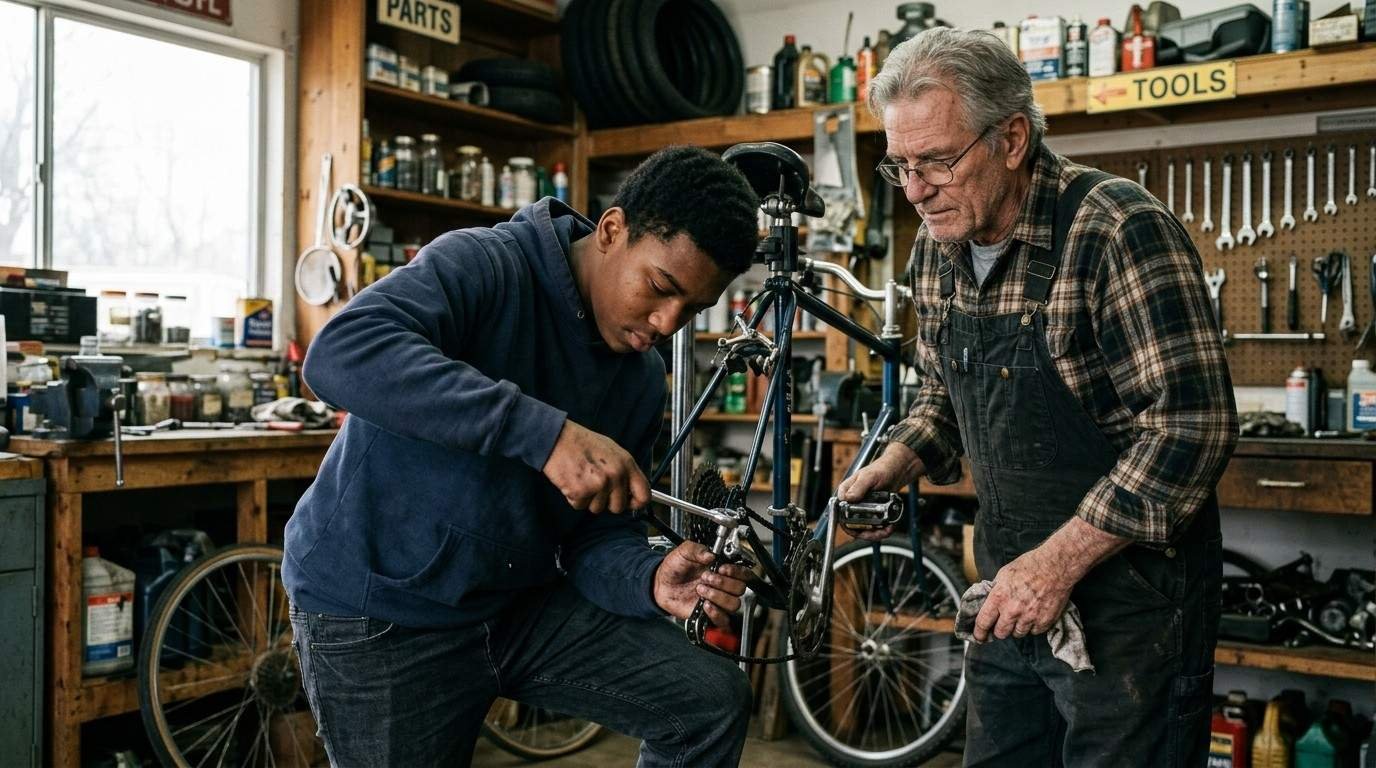
That sequence is where learning happens. The mistake most people make is stopping after step one because step two is uncomfortable.
Unfortunately, step two is also where all the progress lives.
Why Getting Things Wrong Speeds Everything Up
Failure has a reputation problem. Most people experience it as evidence that something is wrong with their approach, or their ability, or their readiness. They respond by stepping back, regrouping, and preparing more carefully before the next attempt.
This is understandable. It is also one of the most reliable ways to slow down the learning process significantly. The retreat feels like wisdom. It produces delay.
The brain encodes information most effectively when there is a gap between expectation and outcome — when something happens differently from what was predicted. That mismatch is what prompts genuine learning. A successful first attempt produces satisfaction.
A failed first attempt produces a question: what specifically went wrong, and what would need to change? That question is the beginning of real understanding. The failure was not a detour. It was the curriculum.
Think about learning a language. The sentence you accidentally butcher in public teaches you more than ten perfectly understood grammar rules sitting quietly in a notebook.
Why?
Because the error creates a gap between what you expected and what actually happened. That gap is where learning occurs.
The brain updates its internal model when reality disagrees with it. If nothing challenges the model, very little changes. This is why people who learn quickly are not necessarily more talented.
They simply collect more feedback. They make more attempts. They generate more useful mistakes.
The person trying, adjusting, and trying again usually outpaces the person waiting to feel prepared. Not because they are smarter.
Because they are receiving better information. Failure feels like proof that you’re behind. More often, it’s proof that you’re finally participating in the learning process.
If You Can’t Explain It, You Don’t Know It
Everyone has had the experience of confidently explaining something and then realizing halfway through the sentence that they have absolutely no idea what they’re talking about. Then the gaps appeared.
The parts you had glossed over because they seemed clear enough became suddenly, obviously unclear. The explanation had revealed the understanding that was not there.
This happens because understanding is often an illusion until you have to organize it for someone else. Teaching forces structure.
You must connect ideas. Fill gaps. Simplify complexity. Remove contradictions. The process reveals exactly where your knowledge becomes fuzzy. That is incredibly useful.
One of the fastest ways to learn anything is to pretend you are responsible for teaching it tomorrow. Not next month.
Tomorrow.
The pressure changes how you think. You stop collecting information and start making sense of it. And that distinction matters. Knowledge is accumulation. Understanding is organization.
The moment you can explain something simply, clearly, and without hiding behind jargon is usually the moment you genuinely understand it.
Until then, you may just be familiar with it.
Fast Learning Feels Different From Slow Learning
The biggest surprise about effective learning is that it rarely feels efficient while you’re doing it. Retrieval feels harder than re-reading. Spaced repetition feels slower than cramming.
Attempting before you are ready feels riskier than preparing more. Teaching feels more uncomfortable than reviewing notes. Yet those are the activities that consistently produce results.
The brain updates itself through engagement, not exposure. It learns when it has to retrieve, adapt, explain, struggle, and adjust.
Comfort is not a learning environment. It is a maintenance environment. Learning is usually not that place.
If your study method feels completely effortless, there is a decent chance your brain is mostly maintaining what it already knows rather than building something new. That doesn’t mean learning should be miserable.
It just means productive learning often feels more like practice than consumption.
So if you’re wondering how to learn anything faster, stop asking how to spend more time with the material.
Ask how to interact with it differently. Test yourself instead of re-reading. Review before you forget. Attempt before you feel ready. Teach before you feel qualified.
The methods feel harder. The results come faster.
And unlike highlighting half a textbook in fluorescent yellow, they actually stay with you.