
Arithmetic ends when the sum is done, and a forecast never quite does. This is about why the worry outlasts the facts, and what it keeps trying to measure.
The Spreadsheet Says You’re Fine
It rarely looks like worry from the outside, which is part of its disguise. To you, it feels like diligence: a budget updated on Sundays, a banking app opened four times before lunch, a notes file full of figures. Everything about it seems responsible, even sensible, which is partly why nobody questions it, least of all you.
You check the balance and it is fine, so you close the app. Ten minutes later you open it again, as though the number might have changed its mind. It hasn’t, and the relief lasts about as long as the screen is lit.
Meanwhile, a quieter ledger is kept in your head. It tallies things the spreadsheet can’t hold, like what the car might cost next year or whether the job will still be there. These items have no cells, which is why they never get crossed off.
Most of us assume that more information will bring more calm, and the assumption sounds entirely reasonable. If the worry is about money, then clarity about money should end it. So we build a better spreadsheet, while the worry quietly relocates to another column.
We often use financial stress and financial anxiety as synonyms, but they describe different things. Financial stress comes from the situation: the bills, the rent, the squeeze, while anxiety is our response to it. That response can outlast the situation, which is why a better balance and a quieter mind are separate projects.
Why Money Became Our Safety Gauge
Money is unusual because it measures safety, choice and time all at once, in a single figure. It pays the rent, but it also buys the ability to say no, to leave, and to recover from a bad month. Few other numbers carry that much weight, which is why some people stay in jobs that stopped meaning much, the pattern now called quiet cracking.
A bad quarter at work stings for a week. A bad year financially can reshape the next five years. Your mind is not being irrational about the stakes, because they are real.
We also inherit our attitudes to it. Many of us learned about money through a parent’s sigh, a tense conversation in the kitchen, or a subject nobody discussed at all. The feeling arrived long before the numbers did, and it tends to outlast them.
Silence makes it heavier. People will compare jobs, homes and holidays, but rarely what they owe, earn or have in the bank. Without a reference point, you can start to feel that a private worry is a private failing.
So the number stops being a number. When you check it, you’re not really asking how much is there, but whether you’re going to be all right. It’s a reasonable question, but a balance can only answer part of it.
None of this makes financial stress imaginary. Rent, debt and rising costs are real pressures, and for many people the worry is a sensible reading of a precarious situation. The point is narrower: even where the numbers are tight, much of the anxiety is about what happens next, not only what is happening now.
Why Uncertainty Is Harder Than Loss
A counterintuitive finding about stress explains a lot here. In a 2016 University College London study, 45 volunteers played a game where turning over a rock might reveal a snake and a mild shock. The most stressful moments were not when a shock was certain, but when the odds were fifty-fifty.
Stress responses, measured through sweating and pupil size, peaked when the outcome was genuinely unknown. Knowing a shock was coming was easier to bear than not knowing. Participants whose stress tracked the uncertainty most closely also predicted the shocks better, although that relationship doesn’t establish that stress itself improved prediction.
Money works the same way for many of us. A definite shortfall can be hard, but you can plan around it, argue with it or at least grieve it. The unknown version, where it might be fine and it might not, gives you nothing to hold.
Researchers have a name for the trait behind this: intolerance of uncertainty, a tendency to find the unknown hard to bear. A 2016 review by Nicholas Carleton argued that fear of the unknown may be a core factor across many forms of anxiety, not just one. The idea is still being tested, but it fits what many of us describe.
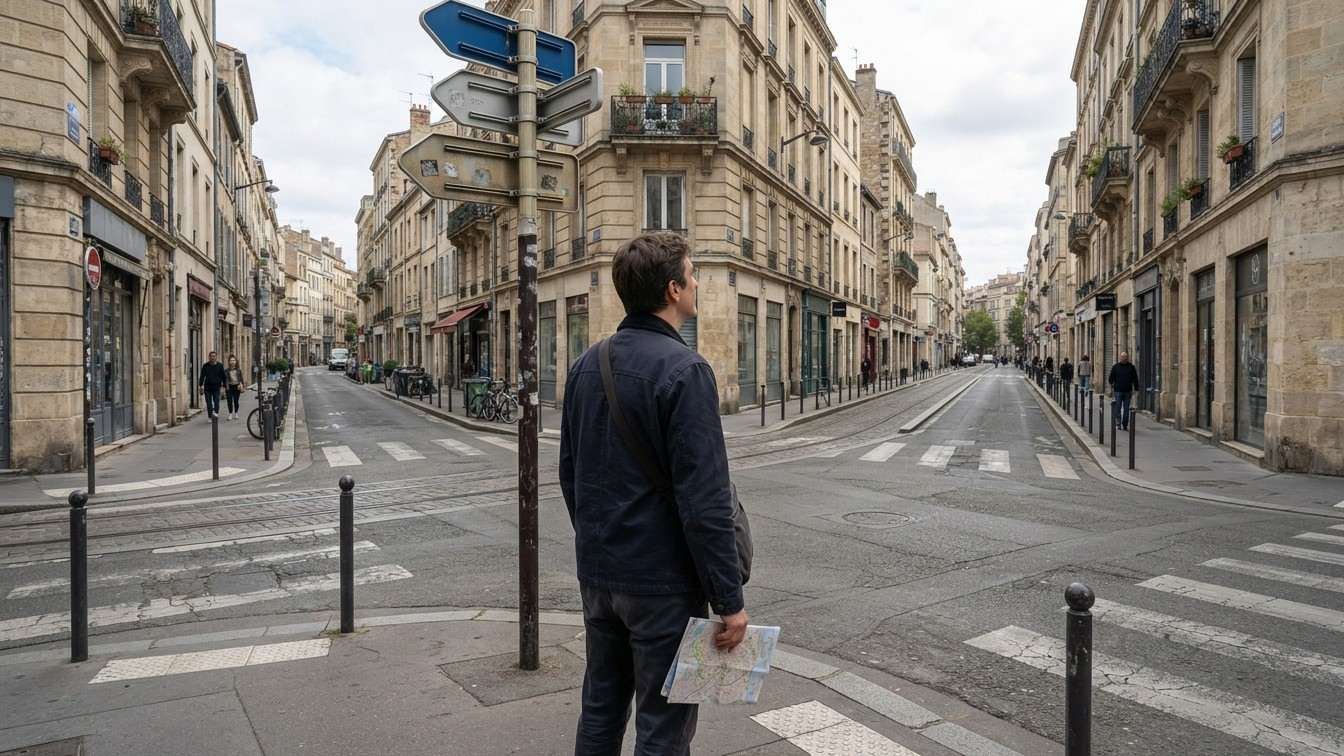
This is why good news can fail to settle financial anxiety. A raise removes one unknown and introduces several new ones, like whether you can keep it or whether costs will rise to meet it. We are asked to feel safe on the strength of a number that tomorrow can revise.
Loss, once it arrives, at least has edges you can walk around. Uncertainty has none, so the mind keeps drawing them, whether the subject is rent or AI anxiety. That drawing is what we usually call worrying.
Why Worry Feels Like Preparation
Worry has a good reputation among worriers. It feels like homework, like the responsible thing to do, as though rehearsing every bad outcome were a way of paying for protection. Psychologists have found that people who worry heavily often hold exactly this belief, and you may hold it too.
Researchers including Thomas Borkovec have argued that these beliefs are built through negative reinforcement. If the feared thing doesn’t happen, the worrying gets the credit. Over time, we start to see the habit as a safety measure rather than a burden.
A second idea, from Michelle Newman and Sandra Llera, is that worry can work as emotional bracing. If you already feel bad, a bad outcome produces less of a drop. In one experiment, people who worried before an upsetting video showed little change in mood, while those who relaxed first dipped sharply.
You may recognize the logic. If you stay braced against financial stress, nothing can catch you off guard, which is what you fear most about money. The bracing feels like control, even when nothing is being controlled.
The trouble is that this preparation has no finishing line. Worry rehearses the bad outcome but rarely produces a plan, so we replay one fear a hundred times with nothing new at the end. Problem-solving moves forward, while worry circles.
Worry is not stupid, and that is the difficulty. It is a sensible instinct aimed at a question that preparation cannot answer. We keep paying for protection that was never going to arrive, and still we renew the subscription.
What Money Worry Costs Our Attention
A popular claim holds that financial stress shrinks thinking itself. In a widely cited 2013 study, Anandi Mani and colleagues gave shoppers at a New Jersey mall a hypothetical car repair bill. When the bill was large, lower-income participants did worse on cognitive tests, while higher-income participants were unaffected.
The same team found that Indian sugarcane farmers scored better after harvest than before it. The proposed explanation was that money worry uses up mental bandwidth, leaving less for everything else. Press coverage compared the effect to losing a night’s sleep, a comparison that stuck.
The story has been harder to confirm since. A 2025 meta-analysis in Collabra found the evidence on financial resources and cognitive performance inconclusive, with any effect far smaller than first reported. Individual studies have pointed in different directions, which is partly why the picture stays unclear.
That leaves a more modest claim, and probably a truer one. You don’t need a lost IQ point to notice what a running worry does to an ordinary evening. It interrupts conversations, pulls your attention elsewhere, and turns dinner into a budget meeting.
Attention is the quiet cost. We rarely tally what we miss while the mind is elsewhere: the joke at the table, the weather, a child’s story about school. The bill arrives in moments, not in dollars.
Worry is expensive even when nothing is spent. It draws on the same limited attention as everything else we care about. That may be the most honest way to describe its price, and the hardest to see on a statement.
What Would Enough Actually Look Like?
Ask yourself how much would be enough to end your financial stress, and the figure may start to move. Ten thousand becomes fifty, then a hundred, because the real target was never the amount. It was the feeling the amount was supposed to buy.
That feeling is safety, mostly, but safety isn’t purely psychological. Money can provide real protection, yet the mind may keep demanding reassurance long after the practical needs have been met. We want to stop checking, stop bracing and stop doing the sums at the sink.
There is a difference between needing more money and needing to know you’ll be okay. The first can be earned, saved or negotiated, although circumstances don’t always allow it. The second involves a sense of security that a bigger balance may not deliver on its own.
Some of that building is practical: a cushion for the likely shocks, a plan for the likely costs, a clearer picture of your worst case. None of it ends the worry by itself, and it was never going to. What it does is shrink the list of things left to rehearse, which is a smaller win than certainty but a real one.
Enough is a personal definition more than a financial one and a life with no obvious next step has its own name, languishing. It includes what you need, what you owe and what you want your days to be made of. The number only makes sense once those answers exist, and most of us have never written them down.
If the balance never changed, what would you need to believe in order to feel safe?