Because here’s the thing: life isn’t some frantic sprint to an imaginary finish line where you finally “make it” and collect your prize. Life is a messy, beautiful masterpiece you’re supposed to savor — preferably without tripping over your own to-do list.
The Modern Drift
There is a particular kind of exhaustion that has no good name.
Not tiredness from overwork, exactly. Not burnout in the clinical sense. Something more like the feeling of having been in motion for a very long time without being entirely sure where you were going, or why, or whether the speed was your choice or something that happened to you while you were distracted.
The modern drift.
It doesn’t arrive dramatically. It accumulates. A morning swallowed by notifications before you’ve had a thought of your own. A conversation you were only half present for. A Sunday evening that dissolved into a screen and left you vaguely worse than before. The nagging sense that your life is happening slightly faster than your ability to actually live it.
Zen philosophy was not written for the smartphone age. It emerged from monasteries, from agricultural rhythms, from a world where the primary enemy of presence was the wandering mind rather than an algorithm specifically engineered to exploit it.
And yet. Pick up almost any Zen quote from the last fifteen hundred years and hold it against the texture of contemporary life, and it fits with an accuracy that should be either reassuring or deeply unsettling.
These are not decorative aphorisms. They are a diagnosis. And in some cases, a prescription.
The Drift Starts in Your Head
“Be master of mind rather than mastered by mind.” — Zen proverb
The modern drift is not primarily an external condition. The notifications, the acceleration, the infinite scroll — these are fuel. But the fire is internal. It’s the mind that goes wherever it’s pulled, that mistakes busyness for direction, that generates anxiety about the future and regret about the past in the four seconds between one distraction and the next.
Zen is not interested in clearing the mind. That project, as anyone who has attempted it knows, is approximately as successful as trying to stop the weather. The mind will think. Thoughts will arrive, uninvited and continuous, like a hyperactive internal broadcast that nobody asked for.
What Zen is interested in is the relationship between you and the thoughts. Whether you are watching them or whether you are them. Whether the thought “I am behind, I am failing, I am not enough” is something you observe passing through or something you climb into and drive.
The gap between those two things is, in Zen terms, everything.
The Expert Trap
Shunryu Suzuki saw the same problem from a different angle: “In the beginner’s mind there are many possibilities; in the expert’s mind there are few.”
The modern drift seduces you with expertise. You become an expert at your own anxiety. Expert at your particular flavor of dissatisfaction. Expert at the mental habits you’ve been running since adolescence, so familiar now that they feel like personality rather than patterns.
The beginner’s mind is not naivety. It is the deliberate refusal to let your accumulated assumptions foreclose what’s actually possible. It is the recognition that the map you’ve been using — about who you are, what you’re capable of, and what your life can look like — was drawn a long time ago and may not reflect the current territory.
To be a beginner again, at anything, is to step outside the drift for a moment. To notice it. Which is where everything else begins.
Presence Is Not a Luxury
“The quieter you become, the more you can hear.” — Zen proverb
There is a version of the modern drift that presents itself as productivity.
You are in a meeting but composing a reply in your head. You are eating lunch but reading something. You are with someone who matters to you, but part of you is already at the next thing, rehearsing, planning, constructing. The body is present. Attention is distributed across six places simultaneously, none of them quite here.
This is not a moral failing. It’s an adaptation to an environment that has been engineered, at considerable expense and sophistication, to fragment your attention into the smallest monetizable units. The economy of the modern drift runs on the partial presence of billions of people. Your distraction is the product.
Zen has two words for what’s being lost: here and now. Which together produce something that has no adequate translation but approximates as: this, completely.
“When walking, walk. When eating, eat.”
The proverb sounds almost comic in its simplicity. Walk when you walk. Eat when you eat. Who would do otherwise?
Everyone. Almost constantly. That is the drift.
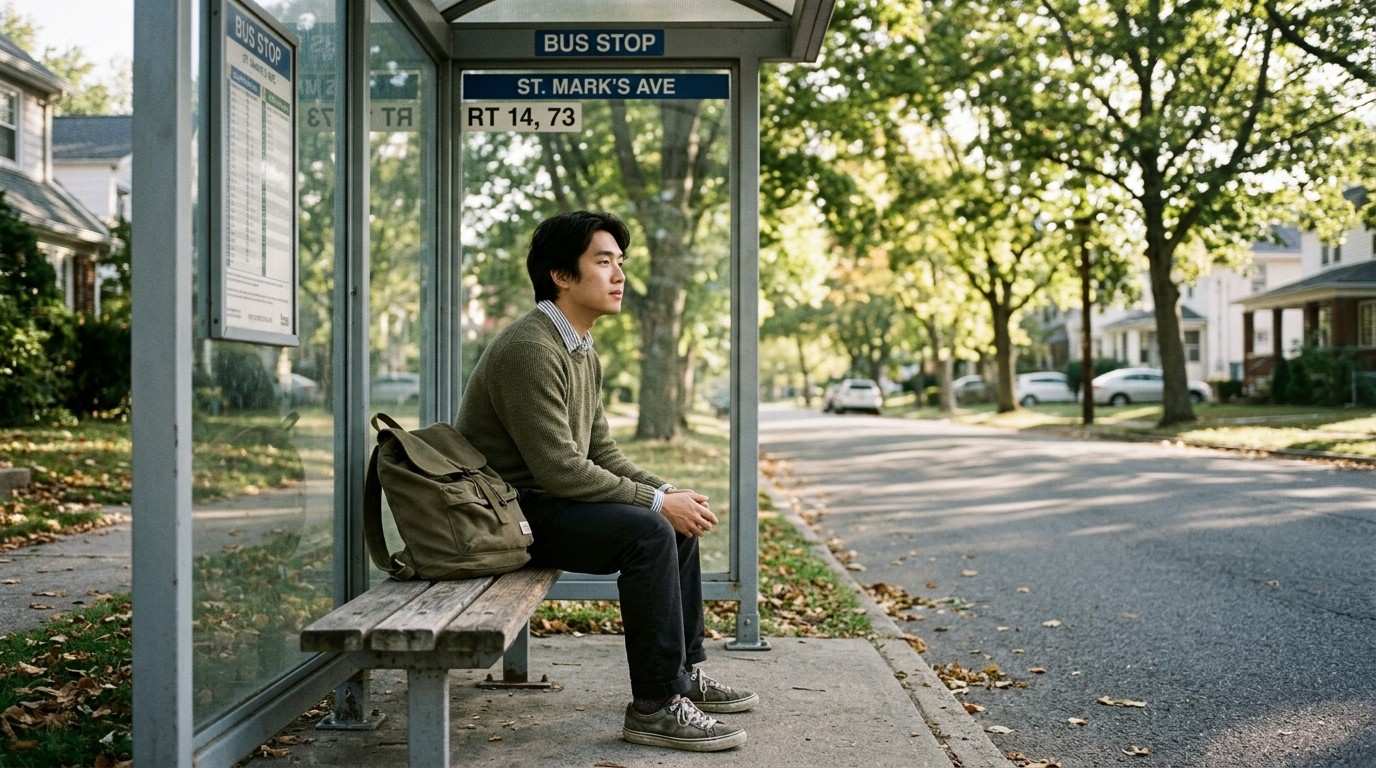
What the proverb is pointing at is not a technique but an orientation — the radical commitment to being in the experience you are actually in, rather than the three you are simultaneously managing in your head. It is not about doing less. It is about being where you are while you are there.
What You Find in the Silence
The silence that Zen keeps returning to — the quieter you become — is not the absence of sound. It is the absence of that constant internal broadcast. And what you find in it, when you actually get there, is not emptiness. It is the actual texture of your life, which had been running beneath the noise the entire time.
The Drift Sells You a Destination That Doesn’t Exist
“The only Zen you find on the tops of mountains is the Zen you bring up there.” — Robert M. Pirsig
The self-optimization industry is, in many ways, the modern drift wearing a productivity badge.
It offers a permanent horizon: the better morning routine, the refined system, the upgraded version of yourself who will finally have things together. And like all horizons, it retreats as you advance. The arrival keeps getting deferred to just past the next achievement, the next improvement, the next thing you need to fix about yourself before real life can begin.
Pirsig’s line is a quiet demolition of this entire structure. You are not going to find peace at the top of the mountain if you don’t already carry the capacity for peace within you. The mountain strips away the distractions. It does not install the thing the distractions were obscuring. That was already there, or it wasn’t.
“Sitting quietly, doing nothing, spring comes, and the grass grows by itself.”
This is perhaps the most subversive Zen quote in the context of a culture that has pathologized stillness. The grass does not grow faster because you micromanage it. Seasons do not arrive on your schedule. Certain things — insight, healing, and the gradual shift in how you see a situation — unfold at their own pace, and the attempt to force them is not effort. It is interference.
The Obstacle Is Not in Your Way
The obstacle, Zen insists, is the path. Not an obstacle to the path. The path itself.
“The obstacle is the path.”
This is not motivational. It is structural. Every genuine difficulty you face is not a detour from your life’s development — it is the means of it. The failure that breaks your assumptions open. The loss that reveals what actually mattered. The forced pause that turns out to be the beginning of something you couldn’t have planned.
The drift wants you to believe the obstacle is the problem. Zen says the obstacle is the lesson, and the lesson is the point, and the sooner you stop trying to get around it, the sooner you actually move through it.
The Antidote Is Smaller Than You Think
“Drink your tea slowly and reverently, as if it is the axis on which the earth revolves.” — Thich Nhat Hanh
Here is what the drift does not want you to know: the antidote is not a retreat, or a transformation, or a dramatic overhaul of your life’s structure.
It is a cup of tea drunk with complete attention.
This sounds absurd until you actually try it. Until you sit with something ordinary — a meal, a walk, a conversation, the quality of light on a specific afternoon — and give it your full, unmanaged, undistracted presence. And discover that what was always there, beneath the speed, was something quite close to what you were looking for.
Thich Nhat Hanh is not recommending tea. He is recommending the practice of treating ordinary moments as if they matter — because they are, in aggregate, the entirety of your life. The special moments, the peak experiences, the highlights: these are a fraction of what a life contains.
What a life actually is, in the accumulated weight of it, is Tuesdays. Is the unremarkable. Is the cup of tea.
The Sacred In the Ordinary
Chop wood, carry water. Before and after enlightenment, the same tasks. The transformation is not in the tasks. It is in the quality of attention you bring to them.
This is what Zen is ultimately arguing, across fifteen hundred years and in dozens of different formulations: that the life you are waiting to start — the real one, after you’ve sorted everything out — is not coming. This is it.
The bins need taking out, and someone has to do the dishes, and the grass is still growing, and the tea is getting cold.
And if you can meet all of that with presence rather than resistance, with attention rather than avoidance, with something like reverence for the fact that you are here at all — you are not drowning.
You are exactly where you are supposed to be.
“Treat every moment as your last. It is not preparation for something else.” — Shunryu Suzuki